Advancements and Trends Forming the Future of Aluminum Casting in Design Solutions
Developments in aluminum casting are changing design options. Advances in casting methods, especially high-pressure die casting and investment casting, are enhancing precision and layout versatility. Automation and wise technologies play a vital function in maximizing manufacturing performance. Sustainability is coming to be a top priority, with environment-friendly products obtaining grip. As these trends progress, they will certainly redefine market standards and consumer assumptions. What effects might these modifications hold for the future of manufacturing?
Advances in Casting Techniques

The Function of Automation in Aluminum Casting
Automation plays a critical function in boosting the aluminum casting process by substantially enhancing manufacturing effectiveness. By incorporating advanced modern technologies, makers can streamline operations and lower cycle times (Aluminum Castings). In addition, automation contributes to improved quality control, making sure regular item standards and minimizing defects
Increased Production Efficiency
Transforming the aluminum casting market, automation significantly boosts manufacturing efficiency. Automated systems enhance various phases of the casting process, decreasing manual work and minimizing human error. High-speed robotic arms can specifically take care of molds, making sure consistent and quick manufacturing cycles. Furthermore, advanced computer system formulas maximize the scheduling and monitoring of sources, resulting in minimized downtime and improved workflow. Automation additionally enables real-time surveillance and modifications, allowing manufacturers to respond quickly to any type of functional issues. By executing automated processes, business can raise outcome while preserving cost-effectiveness. Eventually, this shift in the direction of automation not just enhances performance however also settings makers to meet the growing needs of the marketplace with greater agility and sustainability.
Boosted High Quality Control
A considerable innovation in aluminum casting is the combination of computerized high quality control systems, which boost product consistency and reduce flaws. These systems use sophisticated sensing units and information analytics to check the casting process in real-time, enabling for prompt changes based upon quality metrics. Automation lessens human error and increases the dependability of assessments, making certain that each part fulfills strict requirements. By carrying out machine knowing formulas, makers can predict potential failures and proactively address concerns before they escalate. This not just boosts the general top quality of aluminum items but additionally improves the production procedure, bring about enhanced performance and expense savings. Ultimately, improved quality assurance via automation stands for a transformative action in the aluminum casting industry.
Smart Technologies and Sector 4.0 Integration
The assimilation of smart modern technologies and Market 4.0 in aluminum casting is reinventing production procedures. With the Net of Things (IoT) improving real-time surveillance, automation and robotics are simplifying operations, while data analytics offer crucial insights for optimization. These developments are establishing new standards for effectiveness and precision in the market.
IoT in Casting Processes
Just how can the assimilation of IoT modern technologies improve the performance and accuracy of aluminum casting processes? The application of IoT in casting enables real-time monitoring of temperature level, stress, and other vital specifications, making certain perfect conditions throughout production. Sensors attached to the cloud can accumulate and analyze data, facilitating anticipating upkeep and reducing downtime. By employing intelligent algorithms, suppliers can identify abnormalities that might bring about issues, thus enhancing quality assurance. Furthermore, IoT modern technologies allow seamless communication between machines, enabling worked with procedures and resource optimization. This interconnectedness not just streamlines operations yet also enhances decision-making capabilities, eventually bring about significant expense savings and greater efficiency in aluminum casting procedures.
Automation and Robotics Advancements
While the integration of automation and robotics is changing the aluminum casting market, improvements in smart innovations and Industry 4.0 are driving unprecedented efficiency and accuracy. Automated systems now deal with recurring tasks, lowering human mistake and increasing manufacturing rates. Robotics in casting procedures allows for enhanced handling of complex shapes and fragile parts, guaranteeing constant high quality. In addition, making use of joint robots, or cobots, boosts worker safety and security by taking control of hazardous procedures. Smart technologies facilitate real-time monitoring and changes, optimizing assembly line without manual intervention. As these advancements evolve, they produce a much more agile and responsive production setting, enabling business to adapt quickly to market demands and boost total competitiveness in the aluminum casting industry.
Information Analytics for Optimization
As automation and robotics proceed to improve the aluminum casting market, the incorporation of data analytics becomes a crucial component of Smart Technologies and Industry 4.0. By leveraging huge datasets generated throughout the manufacturing procedure, suppliers can recognize inefficiencies, optimize workflows, and boost product quality. Advanced formulas and artificial intelligence devices make it possible for predictive maintenance, reducing downtime and decreasing functional prices. In addition, real-time data evaluation sustains educated decision-making, enabling nimble actions to market demands. The assimilation of information analytics not just enhances production processes however also fosters advancement in item advancement. As the market progresses, accepting data-driven approaches will be necessary for business intending to preserve affordable benefits and attain lasting development in the aluminum casting sector.
Additive Production in Aluminum Solutions
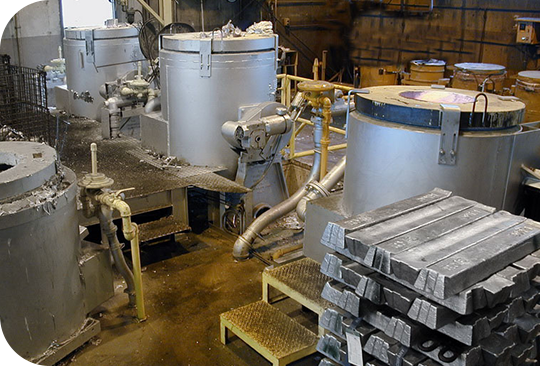
Additive manufacturing accelerates the prototyping procedure, making it possible for fast iteration and style optimization. It promotes the modification of parts, dealing with specific customer demands without the restrictions of conventional casting methods. The assimilation of sophisticated software devices aids in mimicing and refining styles prior to manufacturing, ensuring performance and precision. As the aluminum casting landscape evolves, additive manufacturing attracts attention as a transformative pressure, promoting innovation and opening up brand-new opportunities for engineering options across different industries.
Lasting Practices and Recycling Initiatives
Lasting techniques and recycling campaigns are ending up being progressively vital in the aluminum casting sector, offered the expanding emphasis on environmental duty. Manufacturers are embracing approaches that lessen waste and energy intake, thus lowering their carbon footprint. One prominent pattern is making use of recycled aluminum, which calls for significantly less energy to process contrasted to key aluminum production. This change not just conserves natural deposits yet also reduces greenhouse gas discharges.
Furthermore, innovative casting methods, such as die-casting and sand casting, are being enhanced for sustainability, enhancing material effectiveness. Companies are also buying closed-loop systems that facilitate the reprocessing of scrap steel produced throughout manufacturing. Additionally, collaborations with recycling firms are cultivating a more effective recycling facilities, ensuring that aluminum products have a longer lifecycle. Jointly, these efforts emphasize the sector's commitment to sustainability while satisfying the growing need for ecologically accountable remedies in engineering applications.
Lightweight Products for Improved Efficiency
The aluminum casting sector is not only focusing on sustainability however likewise on the development of light-weight materials that enhance performance throughout various applications. These materials are progressively vital in fields such as vehicle, aerospace, and consumer electronic devices, where reducing weight can result in improved fuel performance and total efficiency. Advanced aluminum alloys and composites are being engineered to attain superior strength-to-weight ratios, making it possible for manufacturers to produce elements that are both durable and lightweight.
Developments in casting strategies, such as high-pressure die casting and investment casting, help with the manufacturing of intricate designs while minimizing material waste. This change in the direction of lightweight materials is not informative post only transforming item layouts however likewise driving affordable advantages in efficiency and efficiency. As markets proceed to prioritize weight decrease, the demand for sophisticated aluminum casting solutions will likely grow, placing lightweight products as a foundation of future design innovations.
Meeting the Needs of Eco-Conscious Consumers
As consumers increasingly focus on eco-friendliness in their buying choices, the aluminum casting industry is adjusting to meet these evolving needs. Producers are currently focusing on sustainable techniques, such as using recycled aluminum, which substantially reduces energy intake and greenhouse gas exhausts contrasted to key aluminum production. Aluminum Castings. This change not only conserves all-natural sources however additionally attract eco conscious customers
Additionally, ingenious casting strategies are being established to reduce waste and enhance power performance during production. Business are likewise discovering eco-friendly coverings and green ingredients to even more minimize their ecological effect.
Transparency in supply chains is coming to be vital, with brands offering details concerning their sourcing and making processes. By straightening with the worths of eco-conscious consumers, the aluminum casting sector is placing itself for a sustainable future, demonstrating that ecological obligation can exist side-by-side with high-grade design remedies.
Regularly Asked Inquiries
What Industries Mainly Use Aluminum Casting Solutions?
Light weight aluminum casting options are primarily made use of in vehicle, aerospace, and durable goods industries. These sectors take advantage of aluminum's light-weight residential or commercial properties, deterioration resistance, and versatility, making it an ideal option for various applications and elements.
How Does Aluminum Casting Compare to Other Steel Casting Approaches?
Light weight aluminum casting deals light-weight homes, outstanding deterioration resistance, and great thermal conductivity contrasted to other metal casting techniques. Aluminum Castings. Its flexibility and efficiency make it a recommended choice in different applications, especially in vehicle and aerospace markets
What Certifications Are Essential for Aluminum Casting Manufacturers?
What Prevail Flaws in Aluminum Casting and Their Reasons?
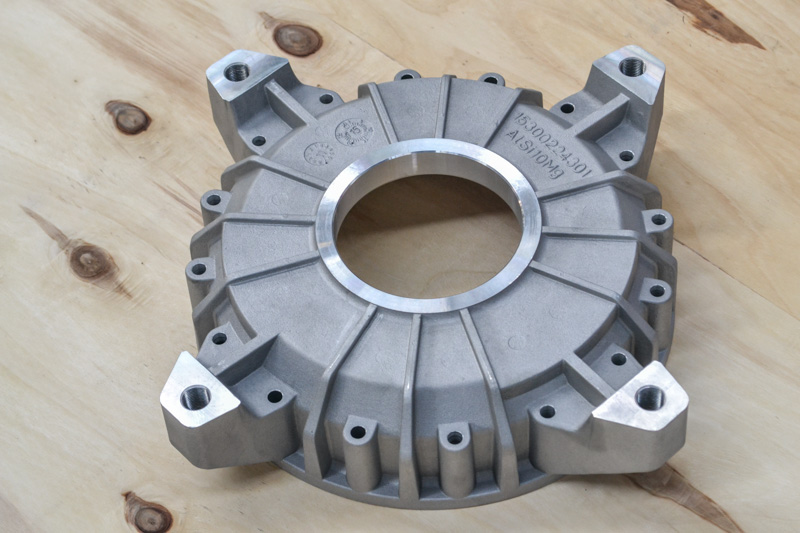
Common issues in aluminum casting include porosity, contraction, and surface imperfections. These problems typically emerge from inappropriate putting techniques, inadequate temperature control, and contamination, affecting the structural integrity and visual quality of the final product.
Just How Can I Select the Right Aluminum Alloy for My Project?
Picking the appropriate aluminum alloy entails taking into consideration elements such as mechanical residential properties, rust resistance, thermal conductivity, and application needs. Examining these standards linked here helps assure peak performance and longevity for the details project in question.